
NFL Draft Betting from the UK: Markets, Mock Drafts and Why Prices Move
 Available in US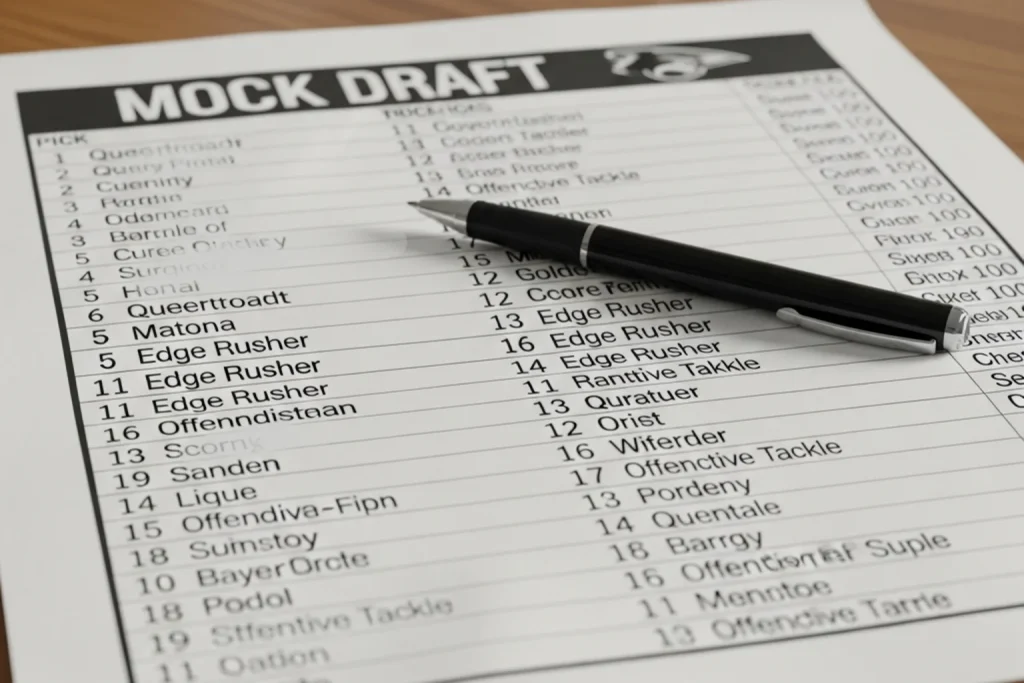
The April fixture that isn’t a fixture
The NFL Draft sneaks up on UK punters every year. There is no game, no kickoff, no scoreboard — just three nights in late April when the league redistributes its incoming talent and the betting markets attached to it can move 50 points of fractional odds in 24 hours. The UK NFL fan base has grown to roughly 17 million by 2026, and a slice of that audience now treats draft night with the same attention they used to reserve for the Super Bowl. I have run draft books for nine seasons. The first three years I was reactive; from year four onwards I started treating the draft as a six-month market, and my hit rate doubled.
What makes draft betting awkward from the UK is the information asymmetry. The US insiders — beat reporters, agents, team-source columnists — leak signals during European working hours and at weekends, and a UK punter waking up to find a quarterback’s odds have halved overnight has often missed the move entirely. The way to win at this market is to be in early, before the signal becomes consensus. This guide walks through the markets that UK sportsbooks actually offer, why first overall pick prices behave the way they do, the position and team-side props that pay better than the headline market, and the reasons odds shift faster on draft than on any other NFL event.
What UK sportsbooks list for the draft
The first time I tried to find draft markets on a UK sportsbook, in 2017, I had to dig through three menus and a ‘specials’ tab. That has changed. Most major UK-licensed books now run a dedicated draft section from January onwards, with the depth expanding as April approaches. The standard list looks roughly like this.
First overall pick. The single most-traded market, listed as outright odds on each named prospect. Prices start to firm up around the East-West Shrine Bowl in late January and reach their final shape after the Combine in late February. By draft night the favourite is often as short as 1/100 or shorter, but in November or December that same player might be 5/1.
Top-three, top-five, top-ten finishing position for named prospects. These markets exist for the same names as the first-pick market but with longer odds and more room for value, particularly on prospects whose stock fluctuates with positional need across the top of the board.
First quarterback drafted. A market that lives or dies on whether the consensus top QB and the consensus top non-QB prospect are seen as the same player. In years where they are not, the first-QB market becomes a proxy for which team picks first.
Number of players drafted by position in round one. Books offer over/under on running backs, offensive linemen, defensive backs and so on. Lines are usually whole numbers with a -110 to -115 vig either side. These are the markets I work hardest on — the position counts are anchored to mock-draft consensus, and consensus tends to lag the actual decision-making by about two weeks.
Team-specific markets. Will a named team draft a QB in round one. Will a named team trade their first-round pick. Will a named team take a player from a named college conference. These markets are thinner but occasionally the prices are mispriced enough that a UK punter who follows beat reporters via social media can find genuine value.
Over/under on total trades in round one. A novelty-tier market that prices the rate at which teams swap picks. The line typically sits around 3.5 trades. Years with more quarterback demand at the top of the board tend to produce more trades; years with a thinner QB class produce fewer.
First overall pick odds: a market that compresses
I have a spreadsheet that tracks the favourite-to-go-first odds at four checkpoints every year: end of college regular season, after bowl games, after the Combine, after free agency. The pattern is striking. In a typical year the favourite goes from around 4/1 in early December to around 1/8 by late March. By the day of the draft the favourite is so short that the market exists only to satisfy people who want to bet a strong favourite at terrible odds.
The reason for the compression is straightforward. The team that holds the first pick is usually known by January — losing teams secure that pick during the final weeks of the regular season — and once the team is known, the prospect they want is normally narrowed to two or three candidates by Combine week. From there, leaks from the team’s facility, public workouts and pro days narrow it further. By April there is rarely meaningful uncertainty.
The implication for UK punters: if you want to bet first overall pick at value, you bet in December or January, not March. The catch is that you are also betting before the player has run a 40-yard dash or thrown at the Combine. A prospect priced 6/1 in December because of concerns about arm strength can become 1/3 if they answer those concerns in February. The reverse is equally true. I have made and lost on this market both ways. The best discipline I have found is to allocate a small fixed amount — maybe 5% of my draft-month bankroll — to early winter positions on first-pick markets, and accept that some of those bets will look obvious losses by March without me having done anything wrong at the time.
Position counts and team props pay better than the headline
The first overall pick market gets the headlines. The over/under on quarterbacks drafted in round one is where I make most of my draft profit. Here is why.
Position counts depend on team need plus prospect availability. Both of those are knowable in advance. Free agency reshapes team need from mid-March onwards: a team that signs a veteran QB in free agency probably is not drafting one in round one, and a team that loses its starting tackle probably is moving up the offensive line in their priorities. The sportsbooks adjust position-count lines after free agency but rarely fast enough. A UK punter who watches free agency through to its second wave — late March, before the casual market is paying attention — can often find a 1.5-point edge on a position count line.
Team props are even thinner. A market on whether the Jets take a QB in round one is priced on team-source signals and beat-reporter consensus. Those signals are noisy. Beat reporters get fed information by team executives partly because the executives want to shape public perception. The result is markets that price the public narrative rather than the actual team intention, and there is sometimes a gap between the two that a careful punter can read.
The downside of position counts and team props: they settle in the moment, with no recovery. If the line says ‘under 3.5 QBs round one’ and the fourth QB goes at pick 30, you are done. With first overall pick markets you can at least watch the signal compress over five months. With position counts you are committed.
Why draft odds move faster than any other NFL market
The draft is a closed-information event. Unlike a regular-season game where the inputs — injuries, weather, lineups — are largely public, the draft is decided by 32 front offices behaving like poker players with their cards face down. Information that leaks is incomplete and partial. The market reacts to leaks with disproportionate moves because there is no countervailing public data to anchor against. A single tweet from a credible beat reporter at 11pm UK time on a Wednesday in April can move a first-overall-pick line from 1/2 to 1/8 by Thursday morning. I have watched it happen.
The 2026 international calendar — 9 NFL games abroad, 3 of them in London — is a reminder that the UK NFL audience is now treated as a primary market by the league, not a curiosity, and the draft betting markets reflect that. UK-licensed books carry deeper draft menus than they did five years ago. The vig is competitive. The closing-line value available to a punter who is in early on a position count or a team prop is meaningful.
The flip side is that the closing line is brutal. Sportsbooks have models that incorporate beat-reporter consensus, mock-draft aggregations and team-source signals in close to real time. By draft week, the line you are betting is the line the sharpest models believe. To beat that line, you need either information the models do not have — which as a UK punter you almost never do — or a read on the soft markets where models do not run as tightly. The thinner the market, the better the relative value. Team-specific props in early April are where I look hardest.
The draft is also one of the cleanest leads into the futures market. Once round one is done, the Super Bowl and division winner odds move noticeably for the teams that drafted well or poorly. If you have followed the draft closely, you will have a read on those team strengths before the futures market does. The relationship between draft analysis and futures positioning is one of the most underused edges in the NFL betting calendar — I cover it in more depth in my NFL futures betting guide, which walks through how draft outcomes feed into season-long markets.
The April calendar that rewards patience
The single biggest mistake I made in my early draft-betting years was thinking of the draft as a three-day event. It is a six-month market. The punters who profit from it are the ones who place positions in January, refine them in February after the Combine, hedge them in March after free agency, and arrive at draft week with most of their exposure already locked in at prices the late market can no longer offer. The punters who lose money are the ones who wake up on draft Thursday, see the favourites, and bet to win pence on the pound.
For a UK audience the draft is a genuine spectator event now — three nights of prime-time television with markets attached. The way to enjoy it as a punter without losing the value is to do the work in winter and use draft week itself to watch the picks rather than chase the prices.
Can I bet on NFL Draft outcomes from the UK?
Yes. All UK Gambling Commission-licensed sportsbooks offer draft markets, typically from January onwards. First overall pick, position counts, team props and trade markets are all standard. Markets close at the moment each pick is announced.
Why do first overall pick odds collapse in March?
Once the Combine is finished and free agency has shaped team needs, the team holding the first pick has usually narrowed their choice to one or two candidates. Beat reporters relay those signals, and the market compresses the favourite from around 4/1 in early winter to 1/8 or shorter by late March. Value on this market sits in December and January, before the field is known.
Articles
Written by the editors at NLF Betting Help.
