
GAMSTOP for NFL Bettors: How Self-Exclusion Actually Works in the UK
 Available in US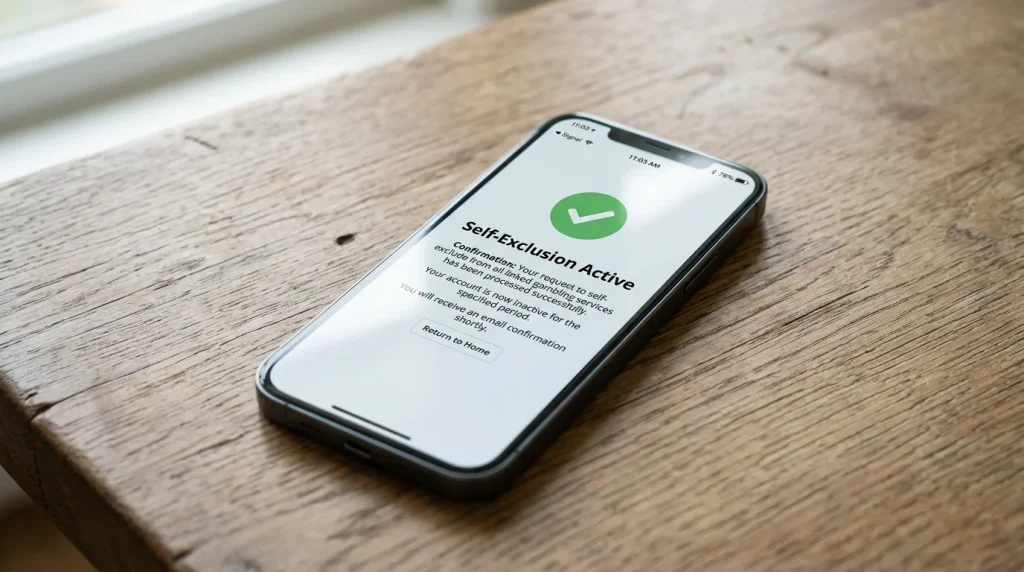
The Friday night a friend signed me out of my own accounts
Six years ago a friend of mine asked me to help him register with GAMSTOP. He had been betting NFL games on Sunday nights and the activity had crept up to where he could not honestly say it was fun any more. The registration itself took 4 minutes — name, date of birth, email, postcode, a selection of exclusion period — and a confirmation email landed in his inbox before we had finished the coffee. By the time he tried to log in to his sportsbook accounts the next morning, every one of them refused his credentials. That is what GAMSTOP does. It is a single registration that switches off every UK-licensed gambling operator at once. There are around 340,000 adults in the UK classed as problem gamblers and another 1.8 million classed as at risk. Among the people who reach the point my friend reached, GAMSTOP is the single most important tool in the safer-gambling architecture, because no operator-level self-exclusion can prevent the punter from simply opening a new account at the next sportsbook over.
This guide walks through what GAMSTOP actually does, how the registration process works, the coverage limits that punters need to be aware of, and what happens at the end of the exclusion period. I have not personally been on GAMSTOP — my own betting has run inside the deposit-limit framework — but I have helped two people through registration and seen both ends of the process from close enough to write about it honestly.
What GAMSTOP actually does
GAMSTOP is the National Online Self-Exclusion Scheme, established by the UK gambling industry under regulatory pressure and now mandatory for every UKGC-licensed online operator. A single registration with GAMSTOP creates a record that every licensed operator is required to check against when a customer attempts to register, log in, or place a bet. If your details match a current GAMSTOP exclusion, the operator must refuse the activity.
The mechanic is comprehensive. The operator is required to check at registration — preventing a new account opening — and at every login on an existing account. They are required to refuse deposits, refuse bets, and refuse to send marketing communications. A GAMSTOP registration effectively switches off the entire UK-licensed gambling environment for the registered individual.
The scheme covers every UKGC-licensed operator. That includes the major sportsbooks, the casino operators, the bingo platforms, and the smaller specialist operators. As of the most recent reporting period, all licensed online gambling operators in Great Britain are required to participate. Operators that fail to comply face licence action — this is not a voluntary scheme any longer.
The minimum exclusion period is 6 months. The other available periods are 1 year and 5 years. Once the period is selected and the registration is confirmed, it cannot be shortened by the user. This is deliberate. A 24-hour cooling-off window applies in the opposite direction to the deposit-limit cooling-off — once you have registered, the exclusion holds for the full chosen period regardless of any subsequent change of mind.
How to register: the practical sequence
Registration takes place on the GAMSTOP website. The required information is straightforward: full name, date of birth, postcode, email address, and any aliases or alternate addresses the registrant has used at gambling operators previously. The aliases field is the one most people get wrong. If you have ever opened a sportsbook account under a variant of your name — a middle name included or excluded, a maiden name versus a married name — that variant needs to be on the GAMSTOP record to ensure the operator-side check matches.
The email address used on the registration should be the email address used at the gambling operators, not a freshly created one. The check that operators run is partly on identity details and partly on contact details, and a fresh email address can miss matches on accounts that had a previously known email.
Once submitted, GAMSTOP confirms the registration by email. The exclusion is live within 24 hours, often within minutes. The system propagates the new exclusion record to all licensed operators automatically — the operators do not need to be notified individually, and the customer does not need to contact each operator separately.
The single piece of friction I have seen at registration is the postcode change scenario. If a registrant has changed address recently and the gambling operator accounts hold the old postcode, the GAMSTOP check may not match cleanly. The fix is to include the previous postcode as an alternate detail at registration. The GAMSTOP form supports multiple postcodes, multiple addresses and multiple email addresses for exactly this case, but the user has to know to fill them in.
GAMSTOP coverage limits and the gaps that matter
GAMSTOP covers UKGC-licensed online operators. That is comprehensive within its scope but it is not the same as covering all gambling that a UK resident might access. The coverage gaps are worth knowing about specifically because they explain why the wider regulatory framework matters.
The first gap is offshore unlicensed operators. Sites operating without a UK Gambling Commission licence are not part of GAMSTOP and have no obligation to honour an exclusion. The UK black-market betting volume has grown from around £5 billion in 2019 to £16.6 billion in 2025, partly because punters seeking to circumvent UK consumer protections have moved to unlicensed alternatives. For a GAMSTOP-registered individual, an unlicensed site looks indistinguishable from a licensed one in marketing, but the GAMSTOP exclusion does not apply there. The protective effect of the exclusion is therefore conditional on the registrant continuing to use only UK-licensed operators — and the most useful complementary tool is the discipline not to engage with unlicensed alternatives at all.
The second gap is land-based gambling. GAMSTOP applies only to online operators. High street bookmakers, casinos and arcades operate their own self-exclusion schemes — typically MOSES for casinos, the Bookmakers’ SENSE scheme for high street betting shops — and registration with GAMSTOP does not automatically extend to these. A person seeking comprehensive exclusion from gambling needs to register with each of the relevant schemes separately.
The third gap is the National Lottery and society lotteries, which operate under separate licensing arrangements. GAMSTOP does not cover lottery products. For most punters this is a marginal gap; for some, it is meaningful enough to need a separate approach.
The fourth and most quietly important gap is the time element. GAMSTOP exclusions expire at the end of the chosen period — 6 months, 1 year or 5 years — and unless the user actively renews, the exclusion lifts automatically. The renewal can be done before the exclusion expires, but it requires action. A user who registered for 6 months in December and then forgot about it will find that exclusion lifting in June without further input. The system is designed to respect the user’s choice rather than to extend exclusions by default, which is the right design but does mean the user is responsible for any renewal.
After GAMSTOP: the cooling-off and the return path
At the end of a GAMSTOP exclusion period, the user does not automatically regain access to their old accounts. The exclusion lifts, but the individual operators may still hold their own internal flags from the period before exclusion, and re-opening an account often requires fresh registration. The process is straightforward — submit a new registration, complete identity verification, deposit fresh funds — but it is not automatic.
UK sportsbooks are required under LCCP to apply additional safer-gambling tools to returning customers. This typically includes a lower default deposit limit than would apply to a new customer, a more frequent reality-check interval, and enhanced monitoring of the first few weeks of activity. The exact policies vary by operator, but the regulatory expectation is consistent: a customer returning from self-exclusion requires more support than a new customer, not less.
The single most important advice anyone who has been through GAMSTOP can give is to use the return period to set up the internal tools on day one. Deposit limit before first deposit. Reality check on at 30 minutes. Time-out option clearly understood. The framework for using these tools is the same as for new accounts, which I cover in my guide to safer gambling tools for NFL bettors in the UK. The difference is that for a returning customer, the tools are not optional decoration — they are the structure that makes the return sustainable.
I have seen both possible outcomes from a GAMSTOP return. One friend went back to betting with proper deposit limits and a smaller bankroll, and three years later was still betting recreationally without difficulty. The other re-registered, ignored the deposit-limit setup, and was back in trouble within 4 months. The difference was almost entirely in the first day back — what tools were set up, what disciplines were in place — not in willpower over time.
What GAMSTOP is not
GAMSTOP is not a treatment programme. It is a technical tool that prevents access to UK-licensed gambling operators for a defined period. The underlying patterns that led to the registration — the financial stress, the relationship stress, the emotional drivers — do not get addressed by the exclusion itself. For most people for whom GAMSTOP is the right step, it is one component of a wider response that also includes contact with GamCare’s helpline on 0808 8020 133, conversation with family or trusted friends, and sometimes formal treatment through the National Gambling Treatment Service.
The tool itself takes 4 minutes to set up. The decisions that lead to the moment of setup are harder than that, and the work that goes on during the exclusion period is harder still. But the 4-minute mechanic is genuinely effective — every UK-licensed operator is required to honour the exclusion, and the architecture has worked as designed for the people I have helped through it. If someone is at the point where they are reading this paragraph and wondering whether they need it, the answer is usually yes, and the registration page is the right next step.
How long is the minimum GAMSTOP exclusion?
6 months. The available exclusion periods are 6 months, 1 year and 5 years. The period is selected at registration and cannot be shortened once confirmed. At the end of the period, the exclusion lifts unless the user actively renews it, and re-opening sportsbook accounts typically requires fresh registration and identity verification.
Can I unregister from GAMSTOP early?
No. Once a GAMSTOP exclusion is confirmed, it holds for the full chosen period. This is a deliberate design feature — the asymmetry prevents impulsive reversal of the exclusion. The only path to gambling at UK-licensed operators before the exclusion expires is to wait for the period to end.
Articles
Written by the editors at NLF Betting Help.
